

Mastering Smart Engine Temp Management: Essential Strategies for Modern Riders

Mastering Smart Engine Temp Management: Essential Strategies for Modern Riders post thumbnail image

As the sun rises on a new era of motorcycle technology, savvy riders are discovering that mastering engine temperature management isn’t just a performance enhancer—it’s a necessity. Whether you’re zipping through city streets or conquering winding mountain roads, keeping your bike’s engine at optimal temperatures can mean the difference between an exhilarating ride and an unexpected breakdown. In this blog post, we’ll dive into essential strategies to help you maintain perfect engine temp control, ensuring that your two-wheeled companion runs smoothly and efficiently. Get ready to rev up your knowledge and ride smarter than ever before.

Let Your Bike Warm up—But Don’t Overdo It

Starting up and blasting off isn’t the move. Your engine needs a little warm-up time, especially on chilly mornings. Letting your bike idle for 30 seconds to a minute helps the oil circulate and brings the temperatura funcionamiento motor up to a safe level.  But here’s the key: don’t just sit there revving it for five minutes thinking you’re helping. That can cause the engine to heat up unevenly and waste gas. Instead, aim for a smooth, easy ride for the first few miles. This gradual warm-up helps everything expand properly, which is great for long-term wear and tear. Plus, it gives you a better feel for how your bike runs that day—any weird noises or lags? You’ll catch them early.

Watch That Temp Gauge Like It Owes You Money

Many newer bikes have temp gauges or warning lights, and they’re not just there for decoration. Your eyes should glance at that gauge the way you check your mirrors—frequently and with purpose. If you’re in stop-and-go traffic or stuck at long lights, your engine isn’t getting the airflow it needs to cool off. That’s when temps can spike fast. If you notice the needle creeping up, kill the engine if it’s safe to do so, or shift into neutral and give it a gentle rev to get the coolant circulating. Also, don’t ignore warning lights. If that overheat indicator pops on, it’s not a drill. Shut it down, cool it off, and check things out. Riding through it could mean warped heads or worse.

Don’t Ride the Clutch in Traffic

Traffic jams are the enemy of a cool engine. Besides the lack of airflow, slipping your clutch constantly just adds more internal heat to the mix. Try to avoid feathering the clutch more than necessary. If you can coast or crawl in gear without constantly riding the friction zone, do it. Not only will your clutch plates last longer, but your engine won’t be constantly revving at low speeds and building heat. If you’re riding a bike with a fan-equipped radiator, listen for it kicking on—and if it’s not, it might be time to get that checked. Your best bet in gridlock? Chill riding. Ease up on throttle blips and keep the RPMs low and steady.

Keep the Coolant Fresh and the Radiator Clean
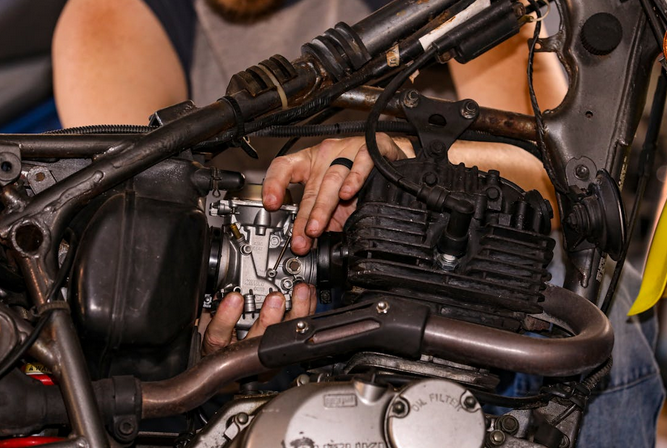
Coolant doesn’t last forever, even though it looks like it should. It breaks down over time and can even start corroding the inside of your cooling system if left unchanged. Most manufacturers recommend changing it every two years or so but check your manual. And here’s a bonus tip: make sure you’re using the type of coolant your bike needs. Some engines need specific formulas or pre-mixed solutions. Also, take a peek at your radiator fins. If they’re caked with dirt, bugs, or debris, airflow takes a hit and your cooling system has to work overtime. A soft brush or a gentle spray from the hose can clear them up nicely. Just don’t go full pressure-washer mode—you might bend the fins.

Use the Right Oil and Change It on Schedule

Your oil isn’t just keeping things slippery—it’s also pulling heat away from the engine’s hottest parts. If your oil is old, dirty, or has the wrong viscosity, your engine’s cooling efficiency takes a hit. Stick to your service intervals and always use the type and weight of oil recommended by your bike’s manufacturer. Some high-performance or air-cooled engines might benefit from synthetic oil, which handles high temps better and stays stable under pressure. Think of oil changes like hydration for your bike. Fresh oil = happy engine. And if you’re riding in super-hot climates or pushing your bike hard, check your oil level more often. Topping off could save you a world of hurt.

At the end of the day, engine temperature management isn’t just for gearheads or racers—it’s essential for anyone who wants their bike to perform well and last longer. Whether you’re commuting, touring, or just riding for fun, keeping your engine cool means smoother rides, fewer breakdowns, and more time on the road. It all comes down to paying attention: warm up properly, keep your fluids fresh, monitor your temperature gauge, and avoid habits that generate unnecessary heat.


Leave a Reply

Your email address will not be published. Required fields are marked *

Related Post

cloud backup

Five Essential Features to Look for in a Cloud Backup ServiceFive Essential Features to Look for in a Cloud Backup Service

Imagine if, one day, you get your laptop stolen. Worse, you haven’t got the chance to make a backup of your data by the time that misfortune happens. You will lose all your data for sure. Therefore, digital storage technology has evolved. And its latest and most versatile form is the cloud storage form. The best online resource for learning about leading cloud backup providers is here.

And below are the essential features to look for in a cloud backup provider.

1. Security

When the first time you heard about cloud storage service, your mind probably wandered back to 2012, where 68 million users of DropBox were at risk of data misappropriation since hackers had leaked their usernames and passwords. If you are to look for a cloud backup service, you’d better check if there has been any breach before. Also, examine the security measures they provide.

2. Warranty

Sadly, many cloud backup providers won’t be held liable if you lose your data you upload to them. And even when there is a cyberattack, and your data is lost, recovering them is not the cloud providers’ responsibility. However, that is for individual and casual users. Only cloud backup providers who are specialized in partnering with business entities provide warranty for the users.

3. Shareability

You may use the cloud backup for yourself, but at some point, you will need to share or edit some of your data with others. And it’d be helpful if your backup cloud has a simple and flexible interface regarding data sharing and collaborative editing. And since most cloud services give free trials to the users, you should try them first before you pay for the service. You should see if the sharing interface is convenient enough or not.

4. Scaleability

Today, you may only need 100 GB of backup storage, but you will never know about the future. Who knows that you will need 1 TB or even 30 TB later on? Therefore, your cloud backup had better be scalable enough. If you need the backup for personal use, then 1 TB is more than enough. But if you are a video editor or music composer, you may need 10 TB or more. And for business, your backup need may go up as much as 30 TB.

5. Helpful Support

You need a real person’s assistance when there is something wrong with your backup data. However, not all cloud services have this. Most of the time, you will have to deal with chatbots or FAQ section. You’d better avoid entrusting your money and data to that kind of service.

money tech

How to Use Technology to Make ProfitHow to Use Technology to Make Profit

In a constantly changing world, using technology to your advantage is more critical than ever. You are falling behind if you are not using technology to make a profit. Let’s discuss how you can use different types of technology to increase your revenue. We will also provide examples of businesses that have successfully utilized technology to improve their bottom line. So, what are you waiting for? Start reading and learn how to make money with technology.

Blockchain Technology

blockchainBitcoin, Ethereum, BNB, Safe Moon, and other cryptocurrencies are making waves worldwide, and it’s about time we caught on. Businesses need to know more about bitcoin profit and how to utilize cryptocurrencies and blockchain technology to make a profit. For those who don’t know, blockchain is a digital ledger that cryptocurrency transactions are recorded. It’s like a virtual version of a checkbook where every transaction is verified and confirmed by each party involved. This makes it nearly impossible to commit fraud or have double spending issues.

Now that we know a little more about blockchain let’s talk about how businesses can use it to make money. For example, some businesses are now accepting bitcoin as a form of payment. This is great for two reasons. First, it shows that the business is open-minded and willing to accept new forms of payment. Second, it allows the business to save on transaction fees. When a customer pays with bitcoin, the merchant doesn’t have to pay a processing fee to the bank. This can really add up, especially for businesses that have high volume sales.

Automation Tech

automation manufacturingBusinesses can also make a profit by automating certain processes. This can be done with the help of apps, software, or even robots. Automation can help businesses save time and money by streamlining repetitive or time-consuming tasks. For example, let’s say you own a food truck. You could use an app to automate your order taking and payments so that you can spend more time cooking and less time dealing with customers. Or, if you own a brick-and-mortar store, you could use robots to help restock shelves or do other tedious tasks.

The Bottom Line

The bottom line is that businesses need to be using technology to make money. There are many different ways to do this, so find the one that works best for you. Stay ahead of the curve and start using technology to improve your bottom line today.

What are some other ways that businesses can use technology to make a profit? Share your thoughts in the comments below. And don’t forget to check out our other articles on how to use technology to improve your business. Thanks for reading.

produce music

Essential Tips to Up Your Music Production GameEssential Tips to Up Your Music Production Game

Are you tired of feeling like your music production skills are stuck in a rut? Do you want to take your tracks to the next level and stand out from the crowd? Look no further. This blog post shares some essential tips to help your music production game. Whether a beginner or an experienced producer, these tips will give you the tools and knowledge to create high-quality tracks that leave a lasting impression on listeners. So, let’s dive in and start elevating your music production skills today.

Master Your Tools and Software

Becoming proficient with your music production tools and software is essential. Whether you prefer working with a digital audio workstation (DAW) like Ableton Live or Logic Pro, take the time to explore all the features and functionalities available to you. Experiment with different plugins, effects, and virtual instruments. The more comfortable you are with your tools, the more efficiently you can bring your musical ideas to life. For example, you can learn the best Serum presets for creating that signature electronic sound with practice.

Learn the Basics of Music Theory

Having a solid foundation in music theory is crucial for any music producer. Understanding concepts like scales, chords, and harmony will help you create more engaging and musically satisfying compositions. Take the time to study music theory through online tutorials, books, or courses. It will give you the tools to make informed musical decisions and allow you to communicate effectively with other musicians.

Develop Your Listening Skills

Being a great music producer requires having a keen ear. Train yourself to listen critically to various genres and styles of music. Pay attention to the arrangement, production techniques, and sonic qualities that make a song stand out. Analyze the mix of different instruments and how they interact with each other. The more you develop your listening skills, the better you’ll become at translating your creative ideas into well-crafted productions.

Embrace Collaboration and Feedback

Don’t be afraid to collaborate with other musicians and producers. Working with others can provide fresh perspectives and new ideas you may not have considered. Seek feedback from trusted peers or mentors who can offer constructive criticism. Be open to learning from others and be willing to adapt and improve based on their suggestions. Collaboration and feedback are invaluable resources for growth as a music producer.

Experiment and Push Your Boundaries

composer

To become a better music producer, it’s essential to experiment and push your creative boundaries. Don’t be afraid to try new sounds, techniques, or genres. Break away from your comfort zone and challenge yourself to explore different musical territories. Incorporate unconventional elements into your productions to add a unique touch. The more you explore and experiment, the more you’ll discover your signature style as a music producer.

Continuously Educate Yourself

The world of music production is constantly evolving, so staying updated with the latest trends, technologies, and techniques is important. Attend workshops, seminars, or conferences related to music production. Follow industry blogs, podcasts, and YouTube channels to stay informed about new tools and developments in the field. Continuously educating yourself will keep you at the forefront of music production and help you refine your skills.

Becoming a better music producer is an ongoing journey that requires dedication, passion, and a willingness to learn. By mastering the basics of music theory, developing your listening skills, becoming proficient with your tools, embracing collaboration and feedback, experimenting, and continuously educating yourself, you’ll be well on your way to becoming a more skilled and versatile music producer.